
How our ventilation works
Every Peacepod has a ventilation system built into its roof. A balanced array of fans does the work — half drawing fresh air in, half extracting stale air out — so the walls and floor stay solid and the acoustic shell is never opened up to make room for ductwork. The count scales with the pod: four fans in the compact models, sixteen in the XL. Running more fans slowly rather than a few of them fast moves the same air with far less noise. It starts on its own when you step inside, and there is a wall panel if you want to change it.
More fans, running slower
Fan count, by model
Fitted as standard on every model — half intakes, half exhausts.
| Model | Capacity | Fanshalf in, half out |
|---|---|---|
| S-Pod | 1 person | 4 |
| MW-Pod | 1 person | 4 |
| M2-Pod | 2 people | 4 |
| L4-Pod | 4-6 people | 8 |
| XL-Pod | 6-8 people | 16 |
A single high-speed fan forces air through a narrow point, and you hear it. Every Peacepod avoids that by using several small centrifugal fans, each running well below its maximum. Spreading the same job across more blades at lower speeds is what keeps the pod quiet while the air keeps moving. It is also why the larger pods scale in fan count rather than fan speed — the L4 doubles the compact count, and the XL doubles it again.
S-Pod · MW-Pod · M2-Pod
4 fans each
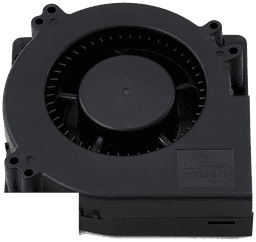
In through the roof, out through the roof
The whole path runs above the ceiling. Half the fans draw air in and half push it out, so stale air is replaced rather than stirred around the pod. Keeping the walls and floor unbroken matters: every penetration is a route for sound, and there are none. The roof ducting carries internal acoustic baffles that force the air along a serpentine route, so sound never gets a straight line to travel in or out.
It switches itself on
A proximity sensor in the ceiling brings the lighting and ventilation up as you step in, and powers them down after you leave. Nothing to remember, nothing left running overnight.
And you set the pace
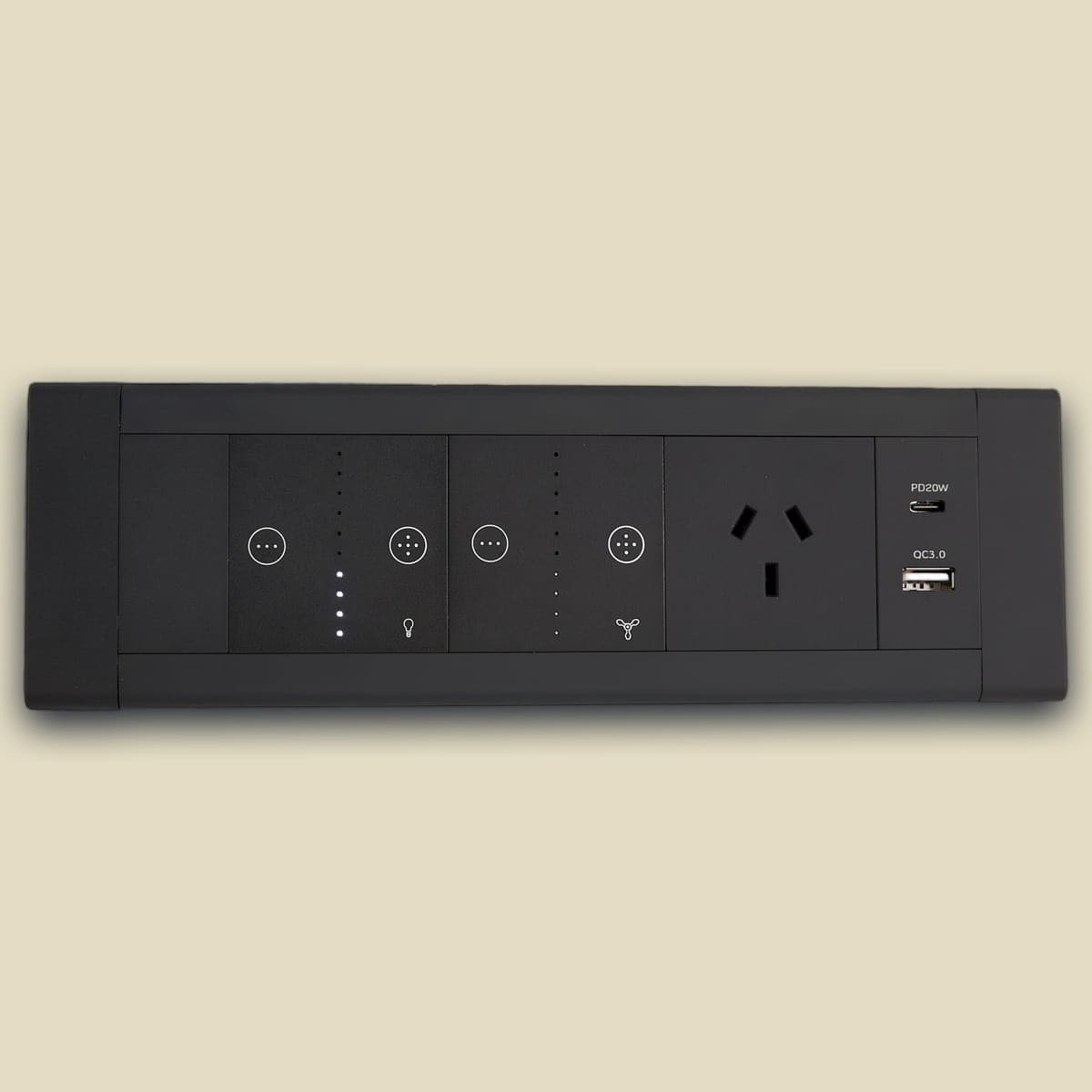
The panel inside the pod adjusts fan speed in the same place you dim the lighting. The system is variable-speed, not on–off — turn it up after a long session, ease it back when you want the room at its quietest.
Moving air without moving sound
Sealing a pod is what makes it quiet — but a sealed box with no airflow goes stale fast. Every pod on the market has to resolve that tension, and how well it is resolved is worth asking about. In a Peacepod the roof ducts are internally baffled, so there is no straight, open channel acting as a sound bridge between inside and outside: the air gets a winding path, sound doesn’t get a shortcut. What you hear is a soft, steady airflow — many people find it masks office noise rather than adds to it.
What to ask any pod supplier
01How many fans — and how many of them extract?
Ours: In every Peacepod, half the fans are intakes and half are exhausts, so stale air is pushed out rather than stirred around.
02Where does the air enter and leave?
Ours: Through the roof — there are no penetrations in the walls or the floor, and nothing to leak sound.
03Does it run continuously, or only when something triggers it?
Ours: Continuously while the pod is occupied. The ceiling sensor starts it when you step in and stops it after you leave.
04If they quote an airflow figure — how was it measured, and on which model?
Ours: We’d rather you compare something you can verify on the spot: open the spec sheet and count the fans.
Ventilation questions, answered
No. Every Peacepod has continuous ventilation as standard — a variable-speed fan system that runs the whole time the pod is in use, so the air keeps moving rather than going stale after the first ten minutes.
The fan count scales with the size of the pod: four fans in the S-Pod, MW-Pod and M2-Pod, eight in the L4-Pod, and sixteen in the XL-Pod. A bigger pod runs more fans rather than faster ones — that is what keeps a full room clear without the noise a single hard-working fan would make. You can set the speed from the panel inside the pod, the same one that dims the lighting, and a proximity sensor in the ceiling brings the lighting and ventilation up as someone steps in, then powers them down after they leave.
Because a pod has to stay sealed to work acoustically, the ducts are internally baffled, so the airflow does not carry sound in or out. The real test is sitting in one with the door shut — which is what a showroom visit is for.
Only when someone is inside — and continuously for the whole time they are.
A sensor in the ceiling starts the fans and the lighting as you step in, and powers them down again after you leave. While the pod is occupied the fans run continuously rather than cycling on and off, so the air keeps moving through a long call or a full meeting instead of going stale after the first few minutes.
You can set the speed yourself from the panel inside the pod, the same one that dims the lighting. It is variable-speed rather than on-off, so you can run it harder after a long session or ease it back when you want the room at its quietest.
Four in the S-Pod, MW-Pod and M2-Pod, eight in the L4-Pod, and sixteen in the XL-Pod.
Half of them draw fresh air in and half push stale air out, and the whole path runs through the roof. The walls and the floor stay unbroken, which matters acoustically as much as it does for airflow — every penetration is a route for sound.
A bigger pod runs more fans rather than faster ones. Several fans turning slowly move the same air as one fan working hard, without the noise that one hard-working fan makes, which is why the count scales with the size of the pod and the speed does not.
Fan count is a number any supplier can give you, and it is worth asking every one of them for it. If you are given an airflow figure instead, ask how it was measured and which model it was measured on.
A Peacepod draws its air from the room around it, so it takes on whatever your building is already doing. In an air-conditioned office the pod sits close to room temperature, with the fans exchanging air the whole time it is occupied.
Two things make a real difference. Keep the pod out of direct sunlight — a glass-fronted pod in a sunny window warms up the way anything else in that window would. And leave the roof clear, because that is where the air enters and leaves.
We do not supply air-conditioning units with the pods. If you need one — a hot climate, a warehouse, a space with no cooling of its own — an air-conditioning penetration is on the options list, so the pod can be connected to a unit you supply. Tell us about the space and we will say what it needs.
No. The Peacepod ventilation system is designed to maintain acoustic performance. The air ducts are internally baffled so they do not create a sound bridge between inside and outside the pod.
The fans run at low speed rather than high — a bigger pod carries more of them rather than faster ones — so the system moves air without adding noise to the room you are trying to keep quiet.
Ventilation is easier to judge in person than on a page — book a showroom viewing, see how the range compares on our comparison page, or read the office pod buying guide.
Judge it from the inside
Ventilation is easier to feel than to read about. Visit a showroom and shut the door — or tell us about your space and we’ll recommend the right size.